What is a 5 interval
 Andrew Rivera
 In classical music from Western culture, a fifth is the interval from the first to the last of five consecutive notes in a diatonic scale. The perfect fifth (often abbreviated P5) spans seven semitones, while the diminished fifth spans six and the augmented fifth spans eight semitones.
Does a scale consist of 5 intervals?
Intra-scale intervals A common scale in Eastern music is the pentatonic scale, which consists of five notes that span an octave. For example, in the Chinese culture, the pentatonic scale is usually used for folk music and consists of C, D, E, G and A, commonly known as gong, shang, jue, chi and yu.
Why are 4th and 5th intervals called perfect?
In Summary. 1) Perfect intervals include adding a note above the first note of a major scale that represents the distance of a unison (prime), 4th, 5th or 8th (octave) interval. … 3) They are labeled as “perfect” because the sound quality is much different from any other intervals.
What are the 4 intervals?
Number of semitonesMinor, major, or perfect intervalsAugmented or diminished intervals4Major thirdDiminished fourth5Perfect fourthAugmented third6Diminished fifthAugmented fourth
What interval is 5 half steps?
A perfect fourth is made up of five half steps. A perfect fourth is made up of five semitones. C to F is a perfect fourth. F to Bb is also a perfect fourth.
What is the quality and quantity of intervals?
Interval quality is based on the number of half steps from one note to another. Unlike in interval quantity, accidentals (sharps and flats), which raise or lower a pitch by a half step, do matter in interval quality. Interval quality gives an interval its distinct sound.
What are the five qualities of intervals and how do you determine the quality of an interval?
Interval Quality: The possible qualities are major, minor, perfect, diminished, and augmented.
How many types of intervals are there?
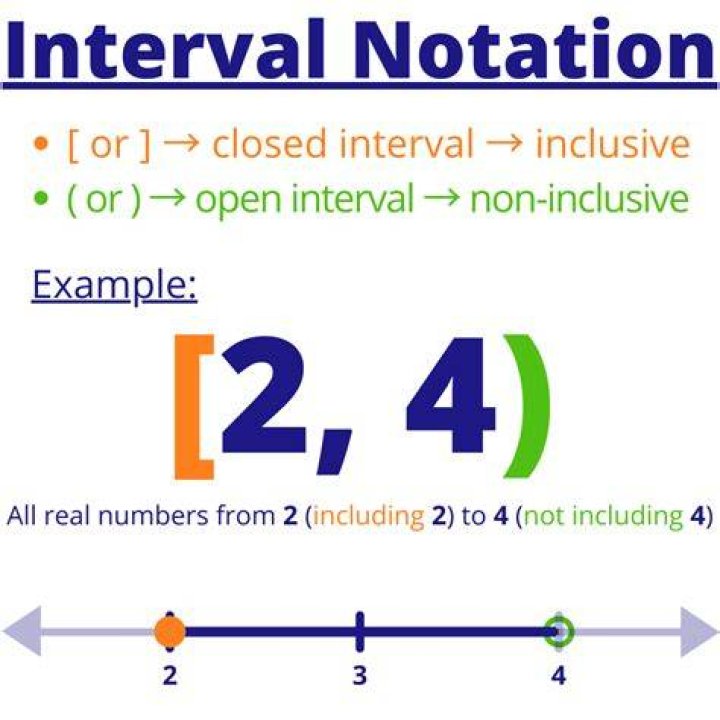
There are 3 types of interval notation: open interval closed interval, and half-open interval.
What are the perfect intervals?
Perfect intervals are the unison, fourth, fifth, and octave. They occur naturally in the major scale between scale note 1 and scale notes 1, 4, 5, and 8.
How many types of intervals are there in music?
There are five different types of quality of interval which are: perfect intervals. major intervals. augmented intervals.
Article first time published on
What are intervals in science?
In scientific terms, an interval is the ratio between two sonic frequencies. For example, any two notes an octave apart have a frequency ratio of 2:1.
What is A major 6th interval?
The major sixth spans nine semitones. … For example, the interval from C up to the nearest A is a major sixth. It is a sixth because it encompasses six note letter names (C, D, E, F, G, A) and six staff positions. It is a major sixth, not a minor sixth, because the note A lies nine semitones above C.
What is perfect 5th in piano?
The perfect fifth interval consists of two notes with seven semi-steps distance. For example, C to G note will result in this musical interval. The reason for the name “perfect” goes back to the Medieval. The unison, fourth, fifth and octave were considered most consonant and therefore were given the name perfect.
What interval is B to D?
The interval between B and D is a third. The interval between A and F is a sixth. Note that, at this stage, key signature, clef, and accidentals do not matter at all. The simple intervals are one octave or smaller.
What makes a major interval?
When you lower a minor interval by a half step it becomes diminished. When you raise a minor interval a half step it becomes a major interval.
What is diminished 5?
diminished fifth (plural diminished fifths) (music) A type of tritone in musical composition comprising six semitones. It spans five diatonic scale degrees like a perfect fifth but narrower by a semitone. The number of diatonic degrees it spans is what distinguishes it from an augmented fourth.
What is a diminished 5th interval?
In music theory, a diminished fifth is an interval that has six half steps (semitones ). The diminished fifth requires that: The interval must be a fifth interval (five note names between the first and the last). The interval must have six half steps.
What intervals are dissonant?
Dissonance is a combination of notes that sound unpleasant or harsh. Dissonant interval examples are major and minor seconds, tritone, and major and minor sevenths. The consonant intervals are considered the perfect unison, octave, fifth, fourth and major and minor third and sixth, and their compound forms.
How do you find intervals in math?
Intervals are written with rectangular brackets or parentheses, and two numbers delimited with a comma. The two numbers are called the endpoints of the interval. The number on the left denotes the least element or lower bound. The number on the right denotes the greatest element or upper bound.
What are intervals in physics?
A longer length of time can be divided into a number of shorter periods of time, all of the same length. These are called time intervals. You could divide the hour up into time intervals of ten minutes. … You record the speed at each ten-minute interval.
Which interval qualities are possible for Unisons fourths fifths and octaves?
Unisons, fourths, fifths, and octaves form perfect intervals, while seconds, thirds, sixths, and sevenths form major and minor intervals. Any interval can be augmented or diminished. Augmented intervals are one half-step larger than a perfect or major interval.
What are intervals in piano?
On the piano keyboard, two notes immediately next to each other are a semitone apart in pitch. The distance in pitch between any two notes is known as an interval, and each interval has a particular name, according to its size.
What are the two types of intervals?
The space between any two pitches is called an interval. Whole steps and half steps are two types of intervals. A whole step can also be called a major 2nd, and half steps are sometimes called minor 2nds.
What is the smallest interval?
An interval is the distance in pitch between two notes. The smallest interval is a semitone. This is the distance between, for example, C and C#.
What do intervals measure?
5.1 Introduction to Intervals Intervals are a measurement between two pitches, either vertically or horizontally. When measuring vertically, we refer to harmonic intervals because the two notes sound simultaneously. When measuring horizontally, we refer to melodic intervals because the notes occur one after the other.
What are intervals in maths?
Let’s start out with the most basic definition: in mathematics, an interval is a set of real numbers between two given numbers called the endpoints of the interval. It is formed by all the numbers lying between the two endpoints of the set. … This means the interval only contains all the numbers between -1 and 1.
What are the different types of interval training?
- The classic. 6 x 2mins. 45secs rest between sets. …
- The minute buster. 10 x 60secs. …
- The incremental. 30secs, 60secs ,90secs ,90secs ,60secs, 30secs. …
- The incrementally harder. 1mins, 2mins, 3mins, 3mins , 2mins, 1mins. …
- The never stationary. 6 x 1mins + 30secs jog. …
- The mile cruiser. 3 x 1mile.
What are three intervals?
An Interval is all the numbers between two given numbers. There are three main ways to show intervals: Inequalities, The Number Line and Interval Notation.
What is an interval easy definition?
1a : a space of time between events or states a two-month interval between medical treatments There were long intervals during the game in which nothing exciting happened. b British : intermission There was a twenty minute interval between acts two and three. 2 : the difference in pitch between two tones.
What is interval example?
An interval scale is one where there is order and the difference between two values is meaningful. Examples of interval variables include: temperature (Farenheit), temperature (Celcius), pH, SAT score (200-800), credit score (300-850).
What is interval in literature?
noun. the period of time marked off by or between two events, instants, etc. the distance between two points, objects, etc. a pause or interlude, as between periods of intense activity. British a short period between parts of a play, concert, film, etc; intermission.