Is Leptin a Adipokine
 Rachel Ross
 Leptin is a pleiotropic adipokine with diverse effects on cell types throughout the body. Its role in neuroendocrine signaling, homeostasis, and metabolism has been well studied.
What type of hormone is leptin?
Leptin is a peptide hormone synthesized by white adipose tissue. The leptin gene (LEP or ob) is on chromosome 7q31. 3. [2] The mature protein is comprised of 146 amino acids and produced through mRNA-directed protein synthesis.
Is leptin an Adipocytokine?
LEP is the first adipocytokine identified and discovered in 1994 by Friedman and Halaas [52, 53]. It is a 167-amino acid protein including a 21 amino acid signal peptide.
Which of the following is an adipokine?
Adipokines are factors produced by adipose tissue that affect metabolic homeostasis, satiety, and reproduction. Currently known adipokines include leptin, adiponectin, resistin, and ghrelin.
What are adipokines inflammatory?
Inflammatory factors are secreted by metabolically dysfunctional adipocytes and innate immune cells that infiltrate obese adipose tissues. Anti-inflammatory adipokines are secreted by metabolically normal adipocytes to attenuate inflammation and coordinate fuel use by metabolically active tissues.
What disease is leptin involved in?
Leptin, an adipocytokine produced in the peripheral system as well as in the brain, is implicated in obesity, food intake, glucose homeostasis, and energy expenditure. Leptin expression levels and signaling pathways may also be linked to the pathophysiology of neurodegenerative diseases including Alzheimer’s disease.
What hormone helps you lose weight?
What it is: Leptin is derived from the Greek word for “thin,” because rising levels of this hormone signal the body to shed body fat. Leptin also helps regulate blood sugar, blood pressure, fertility and more.
What are the examples of adipokines?
Adipokines (also called adipocytokines) are cell-signaling molecules (cytokines) produced by the adipose tissue that play functional roles in energy/metabolic status of the body, inflammation, obesity, etc. Notable examples of adipokines include leptin, adiponectin, resistin, interleukin-6, and tissue necrosis factor.
Is IL 6 an adipokine?
Interleukin-6 (IL-6) can be considered an adipokine since it is released by adipocytes from obese individuals, which occurs in a size-dependent manner (i.e., larger adipocytes release greater amounts of IL-6) and links obesity to a state of low-grade inflammation (Skurk et al., 2007; Schuett et al., 2009).
Do adipokines cause inflammation?
Proinflammatory adipokines, which increase in obese individuals, contribute to systemic inflammation and diseases associated with obesity.
Article first time published on
Are adipokines and Adipocytokines the same thing?
The adipocyte-derived factors (Fig. … These findings indicate that adipose tissue is an endocrine organ and the adipocyte-derived bioactive substances are adipocytokines. Because these adipocyte-derived substances include the molecules belonging to the strict cytokines, they are also called adipokines.
Is adiponectin an Adipokine?
Adiponectin is a recently described adipokine that has been recognized as a key regulator of insulin sensitivity and tissue inflammation. It is produced by adipose tissue (white and brown) and circulates in the blood at very high concentrations.
How many adipokines are there?
The main adipokines include leptin, adiponectin, resistin, tumor-necrosis factor, interleukin 6, chemokine (C–C motif) ligand 2, interleukin 10, and transforming growth factor-β.
What adipokine causes insulin resistance?
Inflammatory responses in adipose tissues become self-generating that eventually leads to increased local and systemic levels of various pro-inflammatory cytokines including tumor necrosis factor-α (TNF-α), interleukin-6 (IL-6), IL-1β, and CC-chemokine ligand 2 (CCL2) that are causative for insulin resistance.
Which adipokine promotes inflammation and causes insulin resistance?
Resistin. First identified in murine adipocytes as a secreted protein capable of inducing insulin resistance [42], resistin is a pro-inflammatory adipokine that induces the secretion of TNFα and IL-6 from various cell types including PBMCs and pancreatic acinar cells [43, 44].
What is leptin imbalance?
People who are obese have high levels of leptin, but the leptin signal isn’t working due to a condition known as leptin resistance. Leptin resistance can cause hunger and reduced the number of calories you burn.
How can I increase my leptin levels to lose weight?
- Berries. Replace sugary treats with fruit in its natural form. …
- Unsweetened Beverages. …
- Healthy Oils. …
- Vegetables. …
- Legumes. …
- Lean Meat, Poultry, and Fish. …
- Whole Grains. …
- Salad Greens.
How do I activate leptin?
- Get enough fibre. …
- Limit fructose consumption. …
- Consume complex carbohydrates. …
- Eat protein for breakfast. …
- Take omega-3. …
- Avoid severe calorie restriction. …
- Perform H.I.I.T (high intensity interval training) …
- Get more sleep.
Can I take leptin to lose weight?
In terms of weight loss, more leptin is not necessarily what matters. How well your brain interprets its signal is much more significant. Therefore, taking a supplement that increases blood leptin levels does not necessarily lead to weight loss.
What triggers leptin?
Leptin secretion Insulin stimulates leptin secretion through a posttranscriptional mechanism that is mainly mediated by the PI3K-PKBmTOR pathway, or other unknown pathways. It has been suggested that the chronic effect of insulin is mediated by glucose metabolism.
What gland produces leptin?
Leptin is a 16-kDa peptide hormone produced mainly by adipocytes, although other tissues and organs, such as mammary gland, ovary, skeletal muscle, stomach, pituitary gland and lymphoid tissue may produce lower amounts, possibly for local action.
What does leptin cause?
When the body is functioning properly, excess fat cells will produce leptin, which will trigger the hypothalamus to lower the appetite, allowing the body to dip into the fat stores to feed itself. Unfortunately, when someone is obese, that individual will have too much leptin in the blood.
Which adipokine is expressed at higher levels in obese individuals?
Thus, in view of the pro-inflammatory adipokines discussed previously, adiponectin is unique in that it is expressed at the highest levels by the functional adipocytes that are found in lean organisms but its expression is downregulated in the dysfunctional adipocytes that are associated with obesity.
Are Adipokines bad?
With respect to CVD, it could be considered a ‘bad’ adipokine given that it promotes insulin resistance, high blood pressure, atherosclerosis, MI risk, vascular inflammation, VSMC hypertrophy and proliferation, oxidative stress and endothelial dysfunction.
When are Adipokines released?
The time course for release by human adipocytes of adipokines at 4, 24, and 48 h is shown in Table 2. Data for IL-10 release are not shown because its release was so low during the first 4 h that it could not be accurately determined.
Is leptin pro inflammatory?
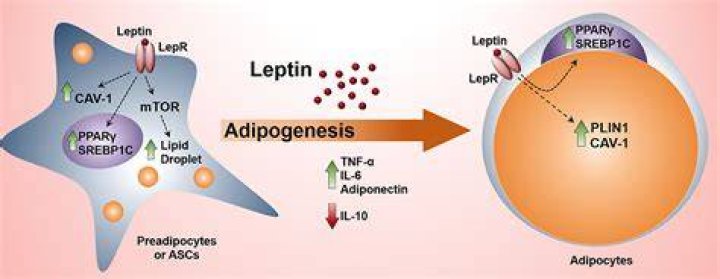
Leptin has pro-inflammatory properties and several actions similar to those of the acute phase reactants, and upregulates the secretion of inflammatory cytokines like TNF-α, IL-6, and IL-12 [61–62].
What are pre adipocytes?
Pre-Adipocytes are derived from mature adipocytes that have been dedifferentiated, and are cryopreserved to ensure optimal phenotype and the highest viability and plating efficiency. Human Pre-Adipocytes can be expanded in an undifferentiated state for future differentiation to mature Adipocytes.
What is Adipose?
Adipose tissue is a specialized connective tissue consisting of lipid-rich cells called adipocytes. As it comprises about 20-25% of total body weight in healthy individuals, the main function of adipose tissue is to store energy in the form of lipids (fat). … White adipose tissue – mainly found in adults.
Is TNF alpha and adipokine?
Tumor necrosis factor alpha (TNF-α), a multifunctional cytokine and adipokine, exerts pleiotropic effects on many cell types and tissues. As an adipokine, this protein negatively regulates many aspects of glucose and lipid metabolism.
What is leptin resistance mean?
“In leptin resistance, your leptin is high, which means you’re fat, but your brain can’t see it. In other words, your brain is starved, while your body is obese. And that’s what obesity is: it’s brain starvation.” Not only is leptin part of the hunger system, it’s also part of the reward system, Lustig says.
How can I increase my adipokines?
There is growing evidence that exercise exerts its beneficial effects partly through alterations in the adipokine profile; that is, exercise increases secretion of anti-inflammatory adipokines and reduces proinflammatory cytokines.