Can you overuse Afrin
 Christopher Snyder
 Afrin (oxymetazoline), Neo-Synephrine (phenylephrine), and other over-the-counter nasal decongestant sprays are popular short-term remedies for nasal obstruction due to colds, sinus infections, and allergies. However, their overuse can lead to a serious medical problem called “rhinitis medicamentosa.”
What happens if you use too much Afrin?
Using Afrin Nasal Spray (oxymetazoline (nasal)) too often or for longer than you have been told may cause nose stuffiness to happen again or get worse. This medicine may cause harm if swallowed or if too much is used. The chance is higher in children.
What happens if you use Afrin more than 3 days in a row?
Nasal decongestant sprays like Afrin (oxymetazoline) have a clear warning: “Do not use for more than three days. Use only as directed. Frequent or prolonged use may cause nasal congestion to recur or worsen.”
How much Afrin is too much?
Spray 2 or 3 times in each nostril, but not more often than every 10 to 12 hours. Do not exceed 2 doses in any 24-hour period.
What happens if I use too much nasal spray?
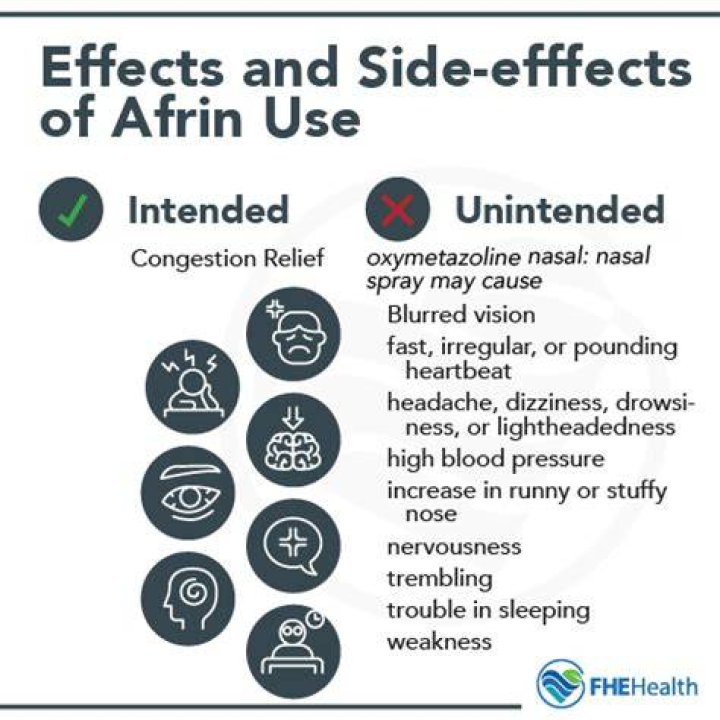
Overuse of nasal sprays can also lead to other side effects, including headache, coughing, nasal passage swelling (inflammation), increased risk of sinus infection, and, rarely, tears in the nostril membranes. Don’t let that scare you from getting the relief you need.
Is Afrin the same as Flonase?
While both Afrin and Flonase are both nasal sprays that relieve the symptoms of nasal congestion, they are not the same. Afrin is a local vasoconstrictor that limits fluid infiltration to the nasal passage. Flonase is a steroid that mediates the inflammatory response brought on by an allergic response.
How do I get rid of Afrin rebound congestion?
Rebound congestion treatment “One can use a nasal steroid (such as Flonase) to help limit the symptoms while the body recovers. In severe cases, an oral steroid can be prescribed, which may help.” Dr. Gels adds that saline spray might help to reduce the inflammation.
Why is Afrin so bad for you?
This rebound nasal congestion is known as rhinitis medicamentosa (RM) that is caused by the extended use of topical decongestants. Long-term use of oxymetazoline may cause the nasal tissues to permanently enlarge and not respond to medications. It may need surgical intervention to cure the blocked nose symptoms.
Is Afrin bad for your heart?
Most topical nasal decongestants (e.g., oxymetazoline, phenylephrine, and naphazoline) also carry the warning against use by patients with heart disease and high blood pressure, due to the possibility that some of the chemical might be absorbed and reach blood levels that would endanger their health.
Is it okay to use nasal spray every day?
To prevent rebound congestion, use over-the-counter decongestant nasal sprays for no more than three days in a row, with as few doses as possible each day. Prescription nasal sprays containing steroids don’t cause this rebound effect, so they can be used on a daily basis for years.
Article first time published on
Can Afrin ruin your nose?
Eventually, the duration of action of the nasal spray decreases, so it must be used more and more frequently for the same effect. If the medicine is used long-term (months to years), permanent damage to the nose may occur. Once a nasal decongestant spray addiction has taken hold, it is tough to break on one’s own.
Can you take Flonase and Afrin?
This requires routine use and the effects build over time Buy Flonase Nasal Spray for Allergy Relief, 24-Hour Non-Drowsy Allergy Medicine, 120 Sprays on Amazon. Afrin and Flonase can be taken together, if one alone is not providing relief.
When can you use Afrin again after 3 days?
Afrin nasal spray should not be used for more than three days at a time to avoid the development of a condition called rebound congestion (or rhinitis medicamentosa).
How long does Afrin rebound last?
Rebound Congestion occurs then the 3 turbinates (superior, middle and inferior) are abnormally enlarged and block the nasal airflow into the nasopharynx. When the sprays are withdrawn, patients endure a period of extreme discomfort that often lasts 4-7 days.
What can I use instead of Afrin?
WORSENED NASAL CONGESTION (REBOUND CONGESTION) If you’re having a stuffy nose for longer than 3 days, consider using a non-medicated nasal spray, like saline (salt-water). Talk to your healthcare provider or pharmacist about better long-term alternatives to help with your congestion.
Can you overdose on Oxymetazoline?
Symptoms of overdose may include: drowsiness, slow heartbeat, dizziness, fainting. Do not share this medication with others. Use of this container by more than one person may spread infection.
Can I use Nasacort and Afrin together?
Interactions between your drugs No interactions were found between Afrin and Nasacort. This does not necessarily mean no interactions exist. Always consult your healthcare provider.
Will Nasacort help with rebound congestion?
If the congestion and swelling are unbearable, different types of nasal sprays may help. Saline nasal (made with salt and water) and steroid nasal sprays like fluticasone propionate (brand name Flonase) and triamcinolone acetonide (brand name Nasacort) are two other medications that can help relieve congestion.
Is Afrin the same as Sudafed?
Sudafed (Pseudoephedrine) relieves stuffy nose, but it could keep you up at night. Don’t forget your photo ID or you won’t be able to buy it in the drugstore. Clears your sinuses. Afrin (oxymetazoline) clears stuffy noses, but can worsen your congestion if it is used more frequently than 3 days in a row.
Can Afrin raise blood pressure?
Topical nasal decongestants such as Afrin (oxymetazoline), Neo-Synephrine (phenylephrine), Privine (naphazoline), and Vicks VapoRub Inhaler (l-desoxyephedrine/levmetamfetamine) can also cause an increase in blood pressure.
What is the most effective steroid nasal spray?
Experts say that over-the-counter (OTC) anti-inflammatory nasal sprays—such as FLONASE nasal sprays or Nasacort® 24 Hour—are the most effective form of nasal allergy symptom relief.
Is flonase a steroid?
Fluticasone nasal spray is used to treat sneezing, itchy or runny nose, or other symptoms caused by hay fever. It is also used to treat nasal polyps in adults. This is a steroid medicine. This medicine is available both over-the-counter (OTC) and with your doctor’s prescription.
How long does Afrin stay in your system?
Effects on α receptors from systemically absorbed oxymetazoline hydrochloride may persist for up to 7 hours after a single dose. The elimination half-life in humans is 5–8 hours. It is excreted unchanged both by the kidneys (30%) and in feces (10%).
Is Benadryl a decongestant?
Benadryl is an antihistamine and Sudafed is a decongestant. Benadryl and Sudafed are available in generic form and over-the-counter (OTC).
Can Afrin cause liver damage?
Chemical sprays eventually cause rebound congestion and headaches which is what leads to addiction in the first place. Chemical ingredients also damage the sensitive lining inside the nose. Moreover, long term use of these chemical sprays can also damage the liver and other vital organs.
How do I know if I have rebound congestion?
Unlike hay fever, rhinitis medicamentosa usually doesn’t include itchy eyes, nose, or throat among its symptoms. Congestion is usually the only symptom. And if you continue to use your nasal spray, this congestion can last for weeks or even months. There isn’t a test to formally diagnose rebound congestion.
What nasal spray is addictive?
THERE IS ONE TYPE OF NASAL SPRAY THAT IS “ADDICTIVE” These are nasal decongestant sprays such as OXYMETAZOLINE (AFRIN®, SINEX, SUDAFED NASAL SPRAY) or NEOSYNEPHRINE!
What causes rebound congestion?
Rebound congestion is a constant nasal stuffiness (congestion) that develops from the overuse of nasal sprays (or drops or gels) that contain a decongestant medicine. This type of congestion occurs even when a person is not experiencing allergies or other cold-like symptoms.
Does Flonase cause rebound congestion?
Does FLONASE® Allergy Relief cause a “rebound” effect? No, FLONASE Allergy Relief does not cause a rebound effect. Some nasal decongestant sprays may cause your nasal passages to swell up even more when you use them too often or for longer than their label says you should (three days).
Why is Afrin bad for thyroid?
Nasal decongestants make blood vessels smaller, and this can raise blood pressure, working against any blood pressure medication a patient is taking. Those with thyroid disease should also avoid these drugs, as thyroid disease can increase the risk of adverse reactions, such as sleeplessness.
Is Afrin the same as Nasacort?
Afrin (oxymetazoline) clears stuffy noses, but can worsen your congestion if it is used more frequently than 3 days in a row. Relieves allergy symptoms. Nasacort Aq (Triamcinolone) is the only medication in its class available over the counter for treating stuffy and runny nose due to allergies.