Are clematis climbers
 Matthew Shields
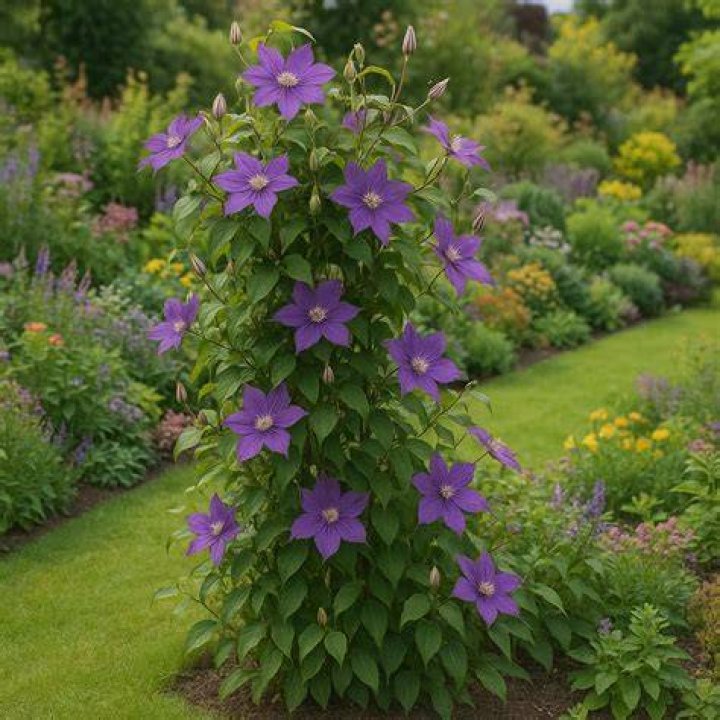
 Clematis is a popular perennial climber hardy in USDA Hardiness Zones 4 through 8. They’re a great choice for a fence, wall, or trellis. There is a wide variety of options as clematis come in many colors, flower sizes, and shapes. Some are at their best in sun and some in shade.
Does clematis need a trellis?
Even though the plant won’t reach its full height the first year, it’s important to provide a trellis, right from the start.
How tall will clematis climb?
Medium Clematis Many clematis varieties grow to a medium height of 6 to 12 feet at maturity, making them useful for trellises or fences, or as a decorative plant by a mailbox or porch post. The cultivar “Edouard Desfosse” (C. “Edouard Desfosse”) is an example of this type, reaching a height of between 6 and 8 feet.
Is clematis a good climbing plant?
Clematis – one of the best known climbers amongst vertical plants – covers a small surface area and provides a beautifully coloured display. This hardy climber also sometimes bears beautiful seed fluff after flowering, and if you plant in April, you can enjoy its benefits all summer long.
How do I get my clematis to climb?
Clematis plants climb by wrapping their leaf stems around the base of something. Clematis can successfully climb onto base supports made of wire, thin branches, steel rods, wooden dowels, fishing line, or twine. Make sure that whatever surface you choose to use isn’t too wide for the leaf stems to twist around.
Will clematis grow on a fence?
Although clematis doesn’t have clasping tendrils or holdfasts that secure it to surfaces, it trains easily with a little help from you as it grows up fences, helping disguise the wood or metal and add privacy.
Where is the best place to plant a clematis vine?
Ideally it’s a sunny spot. Though some clematis cultivars will bloom in partial shade (such as Nellie Moser and Henryii), to reach their full potential they need at least six hours of sun each day. Clematis prefer moist, well-drained soil that’s neutral to slightly alkaline in pH.
Can I grow a clematis against a wall?
Do not plant right against the support, as it will create a rain shadow. If planting against a solid structure such as wall or fence allow about a 45cm (18in) gap between the plant and the wall. Otherwise, a 20-30cm (8in-1ft) gap is sufficient. Some climbers (certain clematis for example) benefit from deeper planting.
Is clematis vine invasive?
This plant has high severity poison characteristics. Sweet Autumn Clematis is easy to grow and can become invasive due to a rampant growth habit in addition to self-seeding. Prune aggressively in fall or early spring.
How long does it take clematis to climb?
Your clematis needs at least two to three years to flourish because its complex root system takes time to establish.
Article first time published on
How fast does a clematis grow?
Are Clematis Fast Growing? Once established, clematis can be very vigorous growers. Each variety will grow at different speeds, but the plants are known to grow anywhere from a couple feet each year, to growing over 20 feet in one year! Some types of clematis can be invasive depending on where you live.
What is the best time of year to plant a clematis?
Planting: Plant clematis in spring or fall. You can plant in summer, especially in the North, but you’ll have to keep the new transplants well-watered and weeded.
Do clematis grow well in pots?
Growing clematis in containers is sometimes essential, whether on terraces, patios, balconies, and so on, or where poor drainage or a high water table makes the soil unsuitable. Clematis demand good drainage, so they are happy in pots, but they won’t tolerate drying out in summer.
Do clematis need to be cut back?
Clematis are the easiest to prune, since you basically cut the whole thing down! … This means that each year in March you should prune back all the stems to just about 12 inches off the ground to make way for the new growth. This group will come back strong and will bloom on the new wood each year.
How do you attach a clematis to a fence?
When you are ready to help train your clematis to go up a fence, start by placing narrow sticks into the ground directly behind the stem and at an angle. The narrow sticks you use should angle backwards toward the fence itself.
What do you do with clematis in the winter?
Winter-pruning clematis simply involves cutting back all stems to 30cm above ground. Growth can be quite rapid once the soil starts to warm and day temperatures rise, so keep on top of tying in new shoots.
Is clematis poisonous to dogs?
Vines Dogs Should Avoid Clematis: A common vine, the clematis plant contains an irritating glycoside that can cause drooling, vomiting, and diarrhea when ingested, according to Pet Poison Helpline. Fortunately, it has a bitter taste that is displeasing to dogs.
When can you plant clematis outside?
The best time to plant clematis is in late spring or early autumn, when the soil is moist and warm, but not too hot. You can plant clematis in summer, but you’ll need to water it more frequently to help it establish well. Avoid planting clematis in winter.
What type of trellis is best for clematis?
Pick wood or metal trellis that matches the expected height of your vine. Some grow up to 30 feet long, so you will need a clever extension plan for those. Some ask if metal trellis might become too hot for the clematis tendrils in the sun?
Can clematis climb fishing line?
Growing Clematis on a Pole The plant usually is sold with a small pole holding up the vine. … These knots prevent the vine from slipping down the line. Fishing line also works for clematis growing on trees.
What is the most invasive plant?
- Purple Loosestrife (Lythrum salicaria) …
- 2. Japanese Honeysuckle (Lonicera japonica) …
- 3. Japanese Barberry (Berberis thunbergii) …
- Norway Maple (Acer platanoides) …
- English Ivy (Hedera helix) …
- Kudzu (Pueraria montana var.
Does Lavender become invasive?
Although lavender (Lavandula sp.) does not currently appear on any invasive species lists, I urge you to read When is a Guest a Pest? and plant any non-native species responsibly.
Do perennials spread?
Many people think that perennials are less work because they come up every year. But some of these plants spread or self-seed so prolifically that they need digging and dividing every three to five years. These plants are not exactly low-maintenance. Such perennials are often given to friends, family and neighbors.
How far does clematis spread?
Then consider the space you have available: Most herbaceous clematis grow to between 75cm and 1.5m tall, with a spread of less than 1m. Climbing clematis range from very vigorous types, suited to covering a house wall or growing into a mature tree, to small and compact ones, suited to container-growing.
Will clematis grow on chicken wire?
You’ll want to have the structure ready so it can start climbing as soon as it’s ready! Climbing Clematis will grow on almost any structure that provides clasping points for the vines to grasp. Chicken wire, a trellis, or fencing materials provide good support.
Will clematis grow on brick?
Perennial Vines Native to the Himalayas, anemone clematis (Clematis montana) is widely used to accent fences, terraces and brick walls. The vine grows to 30 feet in length. Clematis prefers well-drained, nutrient-rich soil and a full-sun location.
Is a clematis an annual or perennial?
Clematis (pronounced klem’uh-tis, accent on the first syllable) is the most popular and most often planted perennial vine. Clematis vines are long-lived, easy to grow and have a long season of showy blooms.
Does clematis flower the first year?
The different varieties of Clematis have a long flowering season, staring early in the year with the C. alpina right through to September the late flowering C. Tangutica, and over winter C. Cirrhosa.
How do you keep clematis from getting leggy?
Clematis need to be pruned regularly to prevent them becoming a tangled mass of stems. Without pruning the plant will become bare at the base, with all of the flowers high up on the plant. Regular pruning encourages strong growth and flowering and keeps the plant within bounds.
What month does clematis bloom?
They usually bloom in two waves. They bloom in late spring or early summer on the previous year’s growth. They often repeat blooming in late summer and early fall on new wood.
How long does a clematis live?
Clematis live for MANY years if they are happy. I have heard of some over 50 years old ! I can think of 3 reasons for your plant to become ‘tired’: 1.